
Stop Blaming AI for Your Code Mistakes
The real crisis in AI-assisted development isn’t the quality of the models — it’s the absence of the systems and habits that make any contributor effective.


Every week, the same complaints surface in developer communities. AI generated a security hole. AI wrote code that doesn’t fit the architecture. AI produced something that worked in isolation and broke everything in context. The posts are shared, the screenshots circulate, and the conversation inevitably reaches the same conclusion: AI can’t be trusted.
But there’s a question almost nobody stops to ask: trusted to do what, exactly, under what conditions?
When a contractor shows up to renovate your kitchen and you hand them a napkin sketch instead of blueprints, you don’t blame the contractor for the result. You had a process problem. The same logic applies here — yet developers who would never think of shipping code without a spec, a review, or a test suite routinely hand AI a one-sentence prompt and expect production-ready output.
AI is not exposing a problem with the technology. It’s exposing a problem with the process — one that existed long before the first model shipped.
The shortcut that isn’t
For decades, developers have copied code from documentation, blogs, Stack Overflow, and colleagues. The pattern is deeply familiar: find something that looks right, paste it in, tweak until it runs. AI has made this faster and more seamless, which has also made the underlying habit more visible and more consequential.
Copying code without understanding it was always a risk. AI simply scales that risk. A snippet from Stack Overflow might be subtly wrong. An answer from a language model might be subtly wrong in a more confident, fluent, and harder-to-spot way. The solution in both cases is the same: understanding what you’re incorporating and why.
The developers struggling most with AI are not the ones using weak models. They’re the ones who haven’t changed their workflow at all — who treat a language model like a faster search engine and wonder why the results don’t hold up in a real codebase.
Context is the king!!!
A new developer joining your team doesn’t start shipping features on day one. They read documentation. They sit with senior engineers. They ask about the architecture, the conventions, the tradeoffs that were made two years ago and the reasons those decisions are still in place. You give them context because without it, even a talented engineer makes predictable mistakes.
Consider the parallel
AI has no memory between sessions. Every prompt is day one. If you don’t provide context — coding standards, architecture constraints, security requirements, business rules — you are asking a capable but completely uninformed contributor to make decisions they have no basis for making.
The teams seeing the most consistent results from AI are not necessarily running newer models or writing more sophisticated prompts. They’re doing something simpler and more durable: they’ve documented their systems well enough that they can explain them to an AI in the same way they’d explain them to a new hire.
Good documentation, clear standards, and explicit architectural decisions turn out to be valuable not just for human teams — they’re the substrate that makes AI assistance actually work. This isn’t a coincidence. The practices that make large codebases maintainable by humans are the same practices that make them usable by AI.
Two ways to use the same tool
The difference between teams that struggle with AI and teams that don’t often comes down to approach rather than capability.
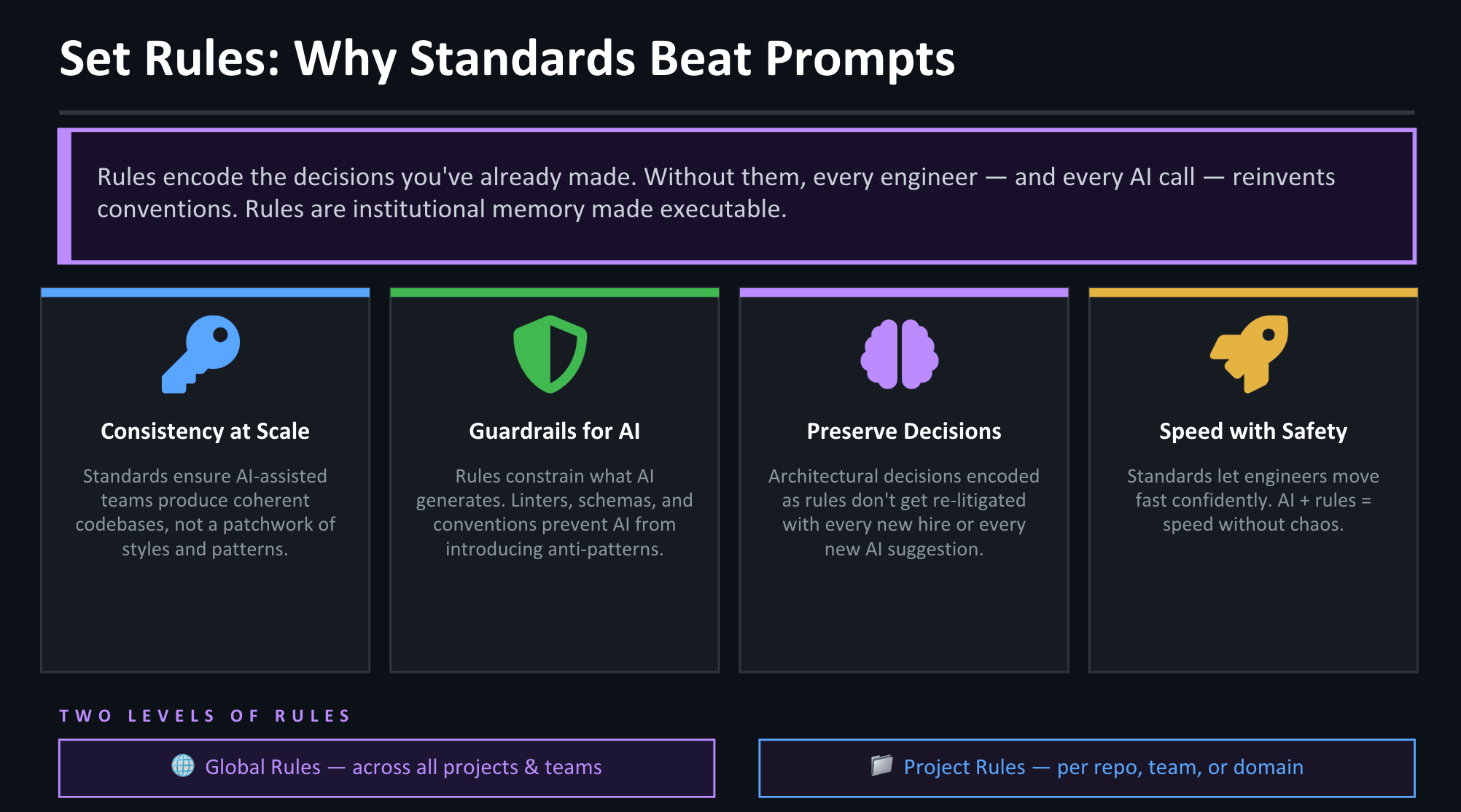
Fragile approach
Isolated prompts with no project context
Copy, paste, hope it fits
No review of what the AI actually produced
Blame the model when things break
Chase the next, smarter model
Durable approach
Context-rich instructions with standards and constraints
AI as a contributor, not an oracle
Review everything as you would any other PR
Own the output regardless of its source
Improve the system, not just the prompt
The second approach doesn’t require a better model. It requires treating AI the way you’d treat any other part of your engineering system: with process, with oversight, and with clear expectations about what it can and cannot know.
Ownership doesn’t transfer
There’s an uncomfortable implication in the way many developers talk about AI-generated code. When it works, it’s a productivity win. When it breaks, it’s an AI failure. But code that ships is your code, regardless of who or what drafted it. A senior engineer who approves a junior’s pull request without reading it owns that code. The same applies here.
This isn’t about skepticism toward AI. It’s about what engineering professionalism has always required: understanding what’s in your codebase and taking responsibility for it. AI makes certain things faster. It doesn’t change what it means to be accountable for a system.
The best developers aren’t becoming prompt experts. They’re becoming system builders — people who organize knowledge well enough that both humans and AI can contribute effectively.
What actually needs to change
The leverage in AI-assisted development doesn’t live in prompt engineering. It lives in the unglamorous work of making your project legible: writing down decisions that currently live only in someone’s head, establishing standards that are actually documented somewhere, creating workflows that encode the things your team has learned the hard way.
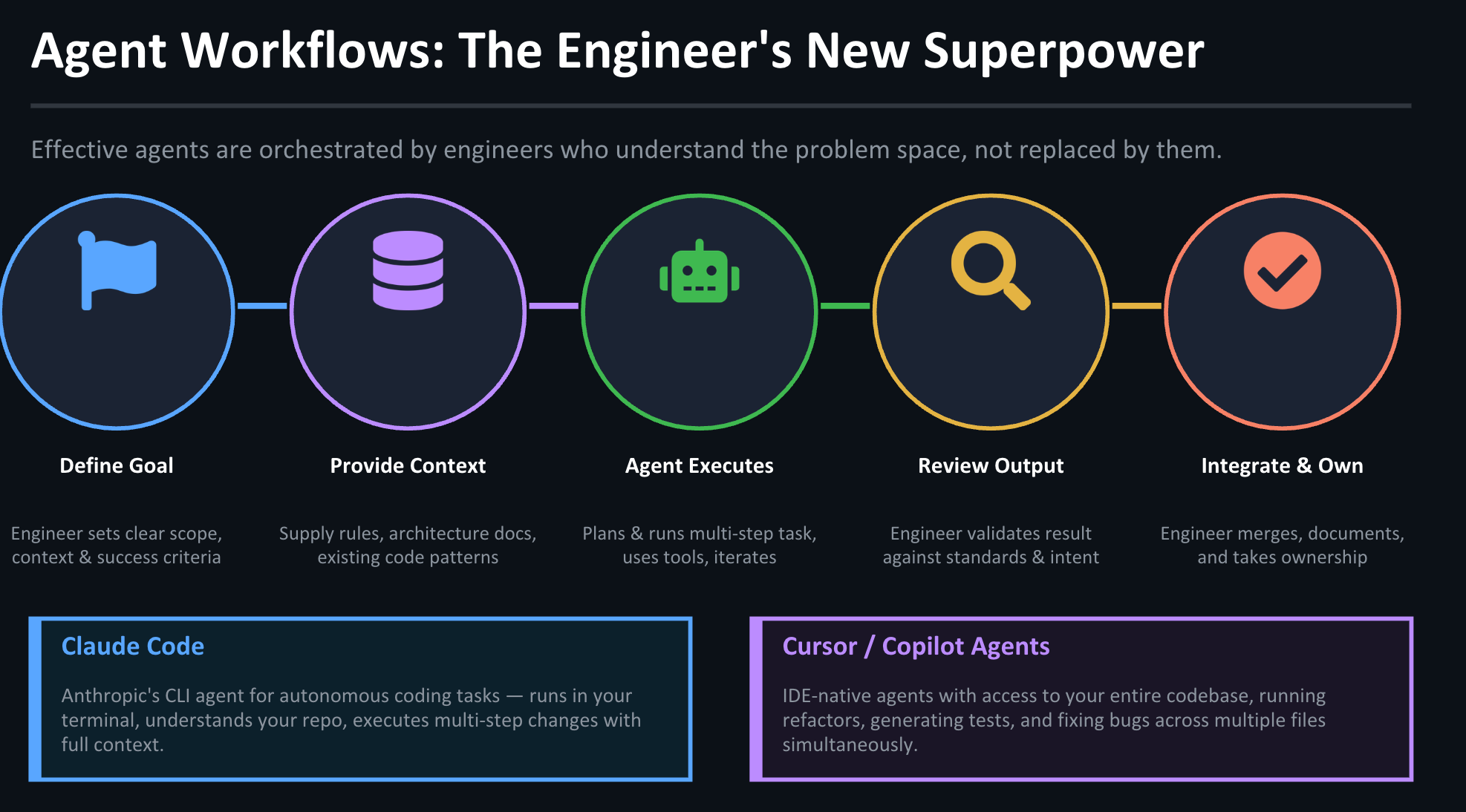
Teams that do this don’t just get more out of AI. They get more out of new hires. They survive key engineers leaving. They make better decisions in general, because the reasoning behind those decisions is recorded rather than assumed.
AI makes the value of these practices more immediate and more visible. A chaotic codebase with no documentation doesn’t just slow down humans — it actively degrades the quality of AI output. A well-documented project with clear conventions produces better results from the same model, consistently.
That’s the actual lesson. Not which model to use. Not which prompting technique to master. Build the kind of system where any contributor — human or AI — can do their best work. Then the question of whether AI “writes good code” mostly answers itself.
🌐 Connect & Follow My Work
You can find my work online here:
🐙 GitHub
https://github.com/kristiyan-velkov
✍️ Medium
https://medium.com/@kristiyanvelkov
💼 LinkedIn
https://linkedin.com/in/kristiyanvelkov
🐦 X (Twitter)
https://x.com/krisvelkov
Buy my new book
Learn Docker directly from person who contribute to Docker and Next.js via examples and knowledge.
If you’re serious about mastering Docker as a front-end developer, understanding Docker Engine is non-negotiable. He we cover just 5% of what you can learn from my book for Docker Engine.
Grab my book and build real production knowledge! Stop be the developer who don’t know Docker!
Grab my book today and I will teach you everything you need to know about Docker!
🎁 20% discount code for you: DOCKER20
@Copyrights Kristiyan Velkov | 2026